Utility Rate Study
Understanding Medical Lake's
Utility Rate Study
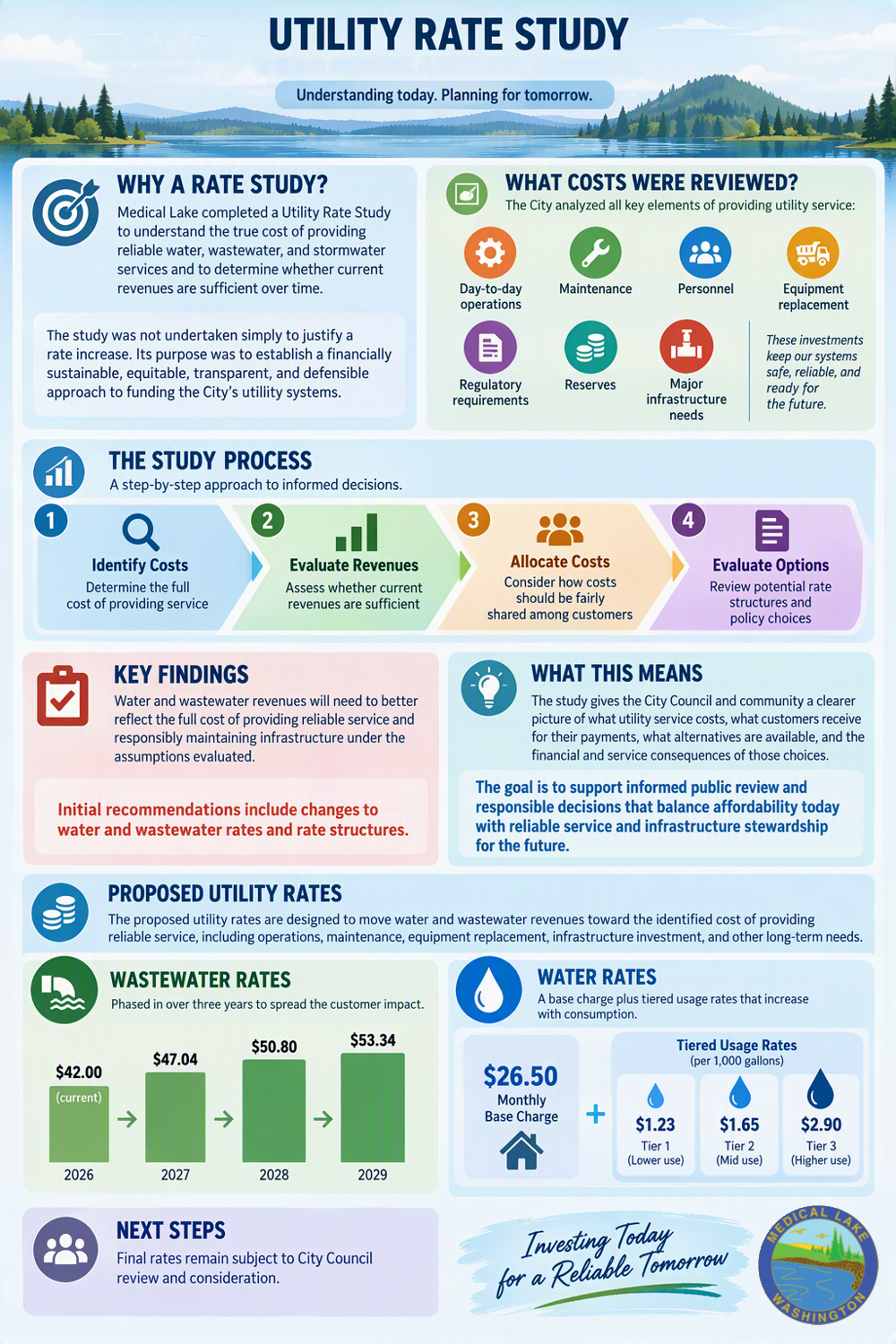
Medical Lake undertook this study to understand what it actually costs to provide safe drinking water and dependable wastewater collection and treatment. The analysis begins with daily operations, then adds planned replacement of pumps, meters, controls, vehicles, and treatment equipment, major capital needs, compliance, reserves, and financing. It then subtracts dependable non-rate revenue and compares the balance with current rate revenue.
The initial water and wastewater memoranda identify funding gaps under the assumptions selected. Water uses a more differentiated base and tiered usage structure. Wastewater uses an interim uniform percentage adjustment across existing classes while the City works toward more refined cost allocation.
Council can change project timing, phase adjustments, revise reserve or financing policies, and choose among rate structures. Each choice changes affordability, revenue stability, replacement timing, and risk. If the City does less now, it must identify what will be delayed, reduced, or funded another way. Public review should therefore focus on the verified costs, the alternatives, and their measurable consequences.
Frequently Asked Questions:
Why is the City reviewing utility rates?
To compare current revenues with the verified cost of operating, maintaining, replacing, and improving each utility. The review provides information for Council choices. It does not begin with a predetermined increase.
What is a revenue requirement?
The annual amount a utility needs from rates and other reliable sources to pay for operations, maintenance, replacement, capital financing, compliance, and adopted reserve goals.
What does cost of service mean?
A method for identifying utility costs and allocating them among customer groups based on how they use or place demands on the system.
Why are water and wastewater separate?
Each system has different infrastructure, operating duties, capital needs, customers, and legal or environmental responsibilities. Each must be analyzed on its own facts.
What is a reserve?
Money intentionally set aside for cash flow, emergencies, planned replacement, debt requirements, or capital projects. It is not extra money.
What is a short-lived asset?
A pump, meter, vehicle, control, instrument, or other component that must be replaced much sooner than a major pipe, well, reservoir, or treatment plant.
What is a capital Improvement?
A major project that builds, replaces, expands, or substantially upgrades long-lived infrastructure.
What is a fixed charge?
A recurring charge that supports costs that remain even when a customer uses little or no water, such as system readiness, billing, staffing, and meter-related costs.
What is a usage charge?
A charge based on measured consumption. It can also reflect higher costs caused by peak or discretionary demand.
What is a rate class?
A group of customers with similar service characteristics, such as residential, commercial, institutional, wholesale, or irrigation users.
Why can't grants pay for everything?
Grants are competitive, restricted, and often require local match. They may help with capital projects but generally do not provide dependable recurring revenue for daily operations and replacement.
Why does the City need replacement funding every year?
Annual contributions spread lifecycle costs over time and reduce dependence on emergency purchases, sudden borrowing, or large one-time adjustments.
What happens if rates remain unchanged?
Council would need to reduce spending, defer replacement or projects, use available balances, identify other lawful revenue, change financing assumptions, or accept greater operational and financial risk.
How were affordability concerns considered?
The water proposal limits the Tier 1 change and shifts more of the added revenue need toward higher use.
How will business customers be treated?
The City has validated each class and compared the cost of serving it. The wastewater proposal currently applies the same percentage to existing classes as an interim method, with more refined analysis identified as a future objective.
Has Council already decided?
No decision should be implied until Council completes public review and formally acts.